Monday, January 27, 2025 - Ile-de-France Region - Paris

Orthopedic/paroscopic collaboration 2.0: the contribution of new technologies

REGISTRATION:

Lunches are no longer provided for registrations after January 23rd.

NEW: 2-day Paris registration package

Register now for the two days in Paris and benefit from the preferential rate:

*Members: you must be up-to-date with your 2025 membership dues

**DESODF residents: to benefit from free meals, you must be a member of the SBR (free registration on the website) - lunch not included

***DU, CISCO and CEFOB: to benefit from the preferential rate you must be an SBR member (half-price membership available on the website) - lunch not included

PROGRAM FOR THE DAY

DR GUILLAUME DARMOUNI

Graduated from the Faculty of Marseille in 2011, DU in Clinical Periodontology from Marseille in 2012, President of the Marseille Association for the Promotion of Periodontology, Founding Director of Lomed Formation.
 
 
The laser: operating principle and advantages in orthodontics

For decades, lasers have interested the dental industry, but finding practical and realistic applications for everyday use has been challenging. In recent years, the advent of diode lasers with new wavelengths has revolutionized their everyday application.

Together we will review some basics on how a laser works, the different wavelengths, and we will discuss clinical applications in dentistry and orthodontics

DR. DANIEL BOUHNIK

Former intern at the Pitié-Salpêtrière Hospital in Paris, qualified specialist in dentofacial orthopedics (Paris VII), private orthodontic practice in the Paris region specializing in aligners, founder of the Aligner Club
The role of lasers in orthodontics. 

In the field of orthodontics, the use of lasers, and in particular diode lasers, is revolutionizing clinical practice. Although this technology is not yet widely integrated into current orthodontic practices, it offers significant advantages. Lasers provide reliable, bloodless treatment with minimal post-operative discomfort. They are particularly useful in numerous clinical situations, such as impacted teeth and gingivectomies for therapeutic or aesthetic purposes.

This presentation explores in detail the clinical applications of diode lasers, their advantages and disadvantages, and best practices for their use in orthodontics. Discover how this technology can transform your practice and improve outcomes for your patients.

A break amidst the exhibitors

DR CLARA KNAFO AND DR ORIANNE GONDEL

Exclusive periodontists with a practice heavily oriented towards ortho-periodontics.
What is the role of orthodontics in periodontal treatment?
Orthodontic treatments are increasingly common among adults, and their management is complex. It must take into account orthodontic, periodontal, and often prosthetic needs. There are few recommendations in the literature to guide these treatments, but it seems clear that they require close collaboration between orthodontists and periodontists. 
What clinical signs should be detected before starting orthodontic treatment? The most frequently asked questions concern the treatment timeline and the type of retainer used. Furthermore, orthodontics plays a crucial role in periodontal management, contributing to the long-term success of periodontal treatments.
 
The objective of this presentation will be to define the orthodontic strategy best suited to the periodontal treatment plan and we will attempt to give you the steps to follow to successfully complete your treatments safely.

Lunch break

DR. ANTHONY ATLAN

Former hospital-university assistant, Paris Descartes University, Master's degree in biomaterials. Private practice in Aesthetic Dentistry and Implant and Periodontal Surgery in Paris, founder of Dentalclub.
Ortho-periodontal-prosthetic relationships in aesthetic dentistry. 

Gingival architecture plays a fundamental role in the aesthetics of a smile. Even slight disturbances can have a significant impact on overall aesthetics and generate considerable complaints from patients. The shape and relative position of the teeth in relation to the periodontium are the primary influences on this architecture. Orthodontic and prosthetic treatments therefore exert a strong, often underestimated, influence on gingival harmony.

The objective of this presentation is to clarify the crucial role of orthodontics and prosthetic treatment on this gingival architecture, and to present clinical cases in order to demonstrate prosthetic, orthodontic or gingival surgical techniques aimed at improving this architecture, and therefore the aesthetics of the smile.

DR RYME LABASSY

Qualified specialist in dentofacial orthopedics, private practice in Poissy. Former intern at Paris hospitals, head of clinic at Paris hospitals.
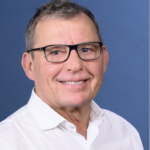
Orthodontics and periodontal regeneration

Intraosseous lesions, resulting from periodontal disease, present a therapeutic challenge. Periodontal regeneration is defined by Melcher as a complete reconstruction of the architecture and function of damaged tissues. This objective has achieved varying degrees of clinical success in the literature but has not always been sufficiently confirmed by histological evidence. Over the years, clinicians have sought different ways to enhance these results. Periodontal regeneration is achieved through biological mechanisms similar to the bone remodeling associated with induced tooth movement. Based on this premise, some authors assert that orthodontic treatment could positively influence the healing, or even the regeneration, of infraosseous defects.
Orthodontics could even become an integral "co-factor" in the periodontal treatment of infraosseous lesions. How can we define the contribution of orthodontics to periodontal regeneration?

We will review this controversial topic and suggest new paradigms for periodontal regeneration induced by combined orthodontic and periodontal therapy. Finally, we will present a retrospective longitudinal study conducted at Bretonneau Hospital.

A break amidst the exhibitors

DR. FRANK POURRAT

Qualified specialist in orthodontics - Instructor at the University Diploma in Lasers and Oral Medicine, Oral Surgery. Diode laser trainer

Let's save teeth with diode lasers.

In our daily orthodontic practice, we sometimes encounter difficulties in continuing treatment. Indeed, we must address the challenges of our patients' daily lives. Coronal or root fractures, rotations, and difficulties in closing spaces can all jeopardize the future of our treatments. Thanks to the diode laser, we can save traumatized or malpositioned teeth immediately.

Clinical examples with their protocols will allow you to anticipate orthodontic treatments.

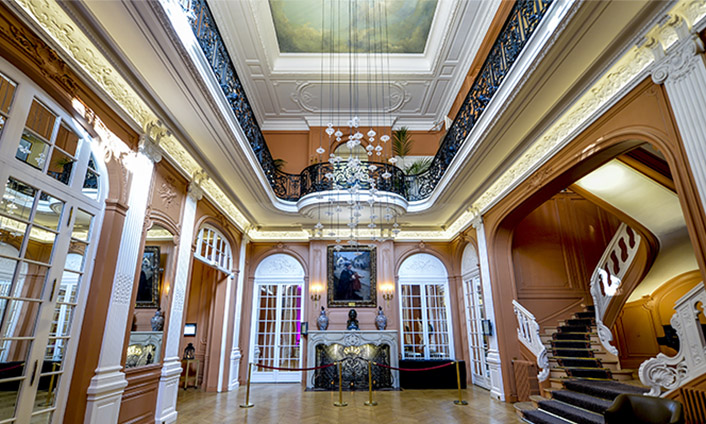
Getting to the Hôtel des Arts et Métiers, 9 bis avenue d'Iéna, 75016 Paris