Monday, March 24, 2025 - Ile-de-France Region - Paris

Early Treatments 2.0:
Innovative Approaches to Optimize
Our Practices in the Office

DAY FOR PRACTITIONERS AND THEIR ASSISTANTS**

PRICES AND REGISTRATION

ATTENTION: Lunches are no longer provided for registrations after March 17, 2025.

Members: €290 (lunch included)

Non-Members: €390 (lunch included)

Assistants: €140 (per assistant, lunch included)

Boarders: Free (lunch optional €50)

DU/CISCO/CEFOB: €50 (lunch optional €50)

*Members: you must be up-to-date with your 2025 membership dues

**Assistant: €140 per assistant only, upon group registration with the practitioner's registration (member or non-member)

***DESODF, DU, CISCO, and CEFOB interns: to benefit from free access, you must be a member of the SBR (free membership for DESODF interns)

PROGRAMME FOR MARCH 24

MORNING PLENARY SESSION: PRACTITIONERS AND ASSISTANTS TOGETHER

9am-10:30am


DR AUDREY BENHAMOU-GIULY – Qualified Specialist in Dentofacial Orthopedics

DR. GILDA MIRGHANE – Qualified Specialist in Dentofacial Orthopedics
Introduction

What are the trends in our practice? Our offices are becoming increasingly digital, and new digital tools are radically transforming our approach. In 2024, the choice of aligners will expand. What innovative orthodontic techniques have been specifically designed for children and adolescents?

We will see the different protocols and tips by offering personalized, high-quality treatments adapted to growing patients.

Materials and Methods

Today, digital tools allow us to create 3D images of patients' teeth quickly and accurately. These are essential for communication, patient care, and cooperation. The appointment sequence for our patients wearing aligners is very similar to that of our other patients with other types of braces. However, with 3D planning software, practitioners can plan each treatment from start to finish.

In 2024, aligners are a preferred orthodontic option for young teenagers and children, offering a discreet and effective alternative to traditional braces. This technique allows for the early correction of dental malocclusions, thus avoiding more extensive treatments in adulthood. It is part of a modern approach to orthodontics, where comfort and aesthetics play a key role in the treatment of young patients.

Conclusion

The digital world is transforming our practices. The digital revolution is changing the way we practice orthodontics, offering more personalized, effective, and discreet treatments. It is essential to stay at the forefront of these advancements to provide excellence to our patients

10:30-11:00: BREAK

11:00-12:00

DR. ANNE DELIOT

Practice limited to orthodontics
 

Modern orthodontics tends to adopt a comprehensive view of our patients' health, with a more holistic approach that seeks functional and postural balance. The bioprogressive philosophy aligns perfectly with this trend by advocating for the early intervention of dysfunctions and dysmorphoses.

Today, the combination of functional educators and aligners represents a modern solution for interceptive treatments. By integrating functional, aesthetic, and technological dimensions, this comprehensive approach aims for optimal results while enhancing patient and practitioner satisfaction.
Does this new option reflect the transition to Orthodontics 2.0, where technology and functional understanding unite for personalized and lasting care?

This presentation will highlight the advantages and disadvantages of this new therapeutic option through clinical cases

12:00-13:00


DR SANDY HERMER
Dental Surgeon specializing in dentofacial orthopedics
 

Why and how I now offer comprehensive information as a preamble to all my services… let me tell you!

1:00 PM - 2:00 PM: LUNCH

AFTERNOON: 2 GROUPS / 2 ROOMS   

1. PRACTITIONER GROUP:

2:00 PM - 3:30 PM


Dr. Camille Philip-Alliez – Qualified specialist in dentofacial orthopedics. University Lecturer and Hospital Practitioner since 2011 at the School of Dental Medicine in Marseille. Member of the Cleft Lip and Palate Competence Center at La Timone Hospital in Marseille.

 

Some young patients with significant skeletal discrepancies, which have a strong morpho-aesthetic and psychological impact, may require surgical correction during their growth. Interceptive surgery can therefore be considered in cases of severe skeletal dysmorphia of secondary or functional origin. It will lead to early normalization, with the immediate consequence of breaking the dysmorpho-dysfunctional spiral.

3:30-4:00 PM: BREAK

4:00 PM - 5:00 PM


Dr. Imen Bouallegue – Qualified specialist in dentofacial orthopedics. Referring orthodontist at the CRMR (Reference Center for Clefts and Rare Diseases) at Necker Children's Hospital. Former hospital-university assistant affiliated with the UFR (Faculty of Medicine) of Reims, holding a university diploma in lingual and aesthetic orthodontics.
Cleft lip and palate is currently the most common congenital facial malformation and continues to inspire numerous research projects aimed at optimizing its management. The care pathway for a patient with a cleft lip and palate can be particularly lengthy, extending from birth until
the end of growth, depending on the severity of the condition. This requires a tailored multidisciplinary approach that adheres to a precise treatment schedule linked to the specific anatomical characteristics of this pathology.
At the heart of this team, the orthodontist must intervene from the earliest stages of care, through intelligent and ongoing collaboration with the various professionals involved, to enable lasting functional and aesthetic rehabilitation within this unique growth context.
Through this practical and clinical presentation, we aim to outline the key aspects of early orthodontic management in order to optimize its effectiveness.

2. GROUP OF ASSISTANTS

2:00 PM - 5:00 PM


Ms. Laura Renouvel – Functional Education Coordinator


1. Introduction to Functional Education
> Concept of normality in orthodontics
> Knowing how to observe the patient
> Repercussions of poor posture, dental misalignment and narrow jaws
> Orofacial harmony, orofacial musculature and orofacial functions

2. Why treat children with Functional Education
> Definitions, objectives, actions and benefits
> Impact and imperatives of treatment with FE

3. The course of a Functional Education treatment phase
> Role of the medical team and task allocation
> Appointments and their protocols
> Difficulties encountered
> Emergencies
> Complementary exercises in the form of games, in cases of persistent orofacial dysfunctions

4. Communication in the office
> Communication tools
> Presentation of the office
> Interaction with the patient and parents

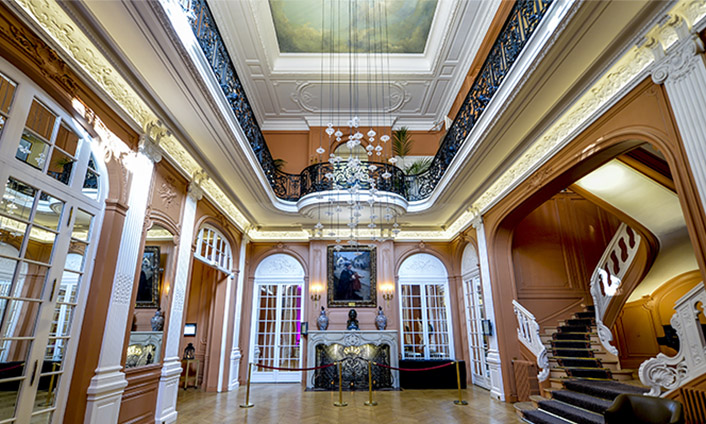
Visit the reception rooms at the Hôtel des Arts et Métiers