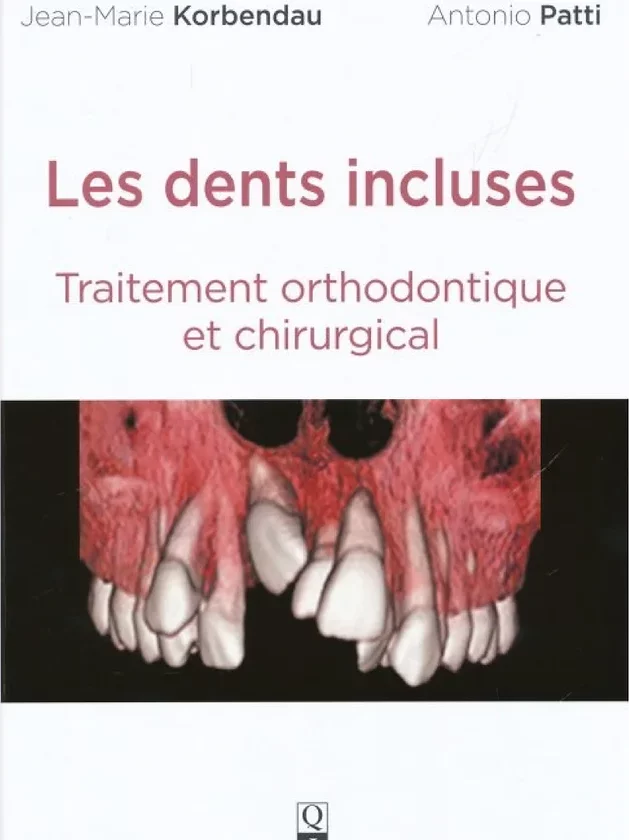
Most impacted teeth can now be exposed and guided into their proper position in the dental arch through a combination of orthodontic and surgical treatment. The two authors had previously published "Orthodontic and Surgical Treatment of Impacted Teeth," which focused largely on the challenges of erupting maxillary canines. Published in 2005 in the "Réussir" series, it is now out of print.
A new, much more ambitious version was presented at the publisher's booth during the 16th Orthodontic Conference.
As in the previous work, emphasis is placed on the need for a precise anatomical diagnosis, for preparing the emergence space before the surgical phase, and for using the most appropriate and effective mechanics for each case.
However, the new edition is completely revised and updated from the perspective of surgical and orthodontic techniques (bonding, mini-screws, lingual orthodontics).
In six sections, the authors aim to cover all the impaction situations that can lead to the repositioning of teeth in the dental arch.
The first section serves as a concise introduction to all the problems posed by the impaction of replacement teeth, with particular emphasis
on the maxillary canine.
Its germ forms at the junction of the premaxilla and the maxillae proper. Its path is long and winding. These two factors combine to promote deviations in its orientation. However, the relatively late age of its appearance allows for monitoring and preventive intervention to encourage natural eruption.
All conventional and sectional imaging protocols (CT scan and cone beam) necessary to determine the therapeutic indication, as well as surgical and orthodontic protocols, are described along with their indications. Situations in which extraction is the necessary choice are discussed, particularly root tissue loss leading to ankylosis and
dentigerous cysts.
Each of the following sections is dedicated to a particular group of teeth.
• Section 2 is devoted to the
maxillary incisors and canines.
It begins with an explanation of their eruption under normal conditions
. A chapter is devoted to the supernumerary dental and odontoid elements, which are particularly numerous in forming in the median region of the premaxilla.